
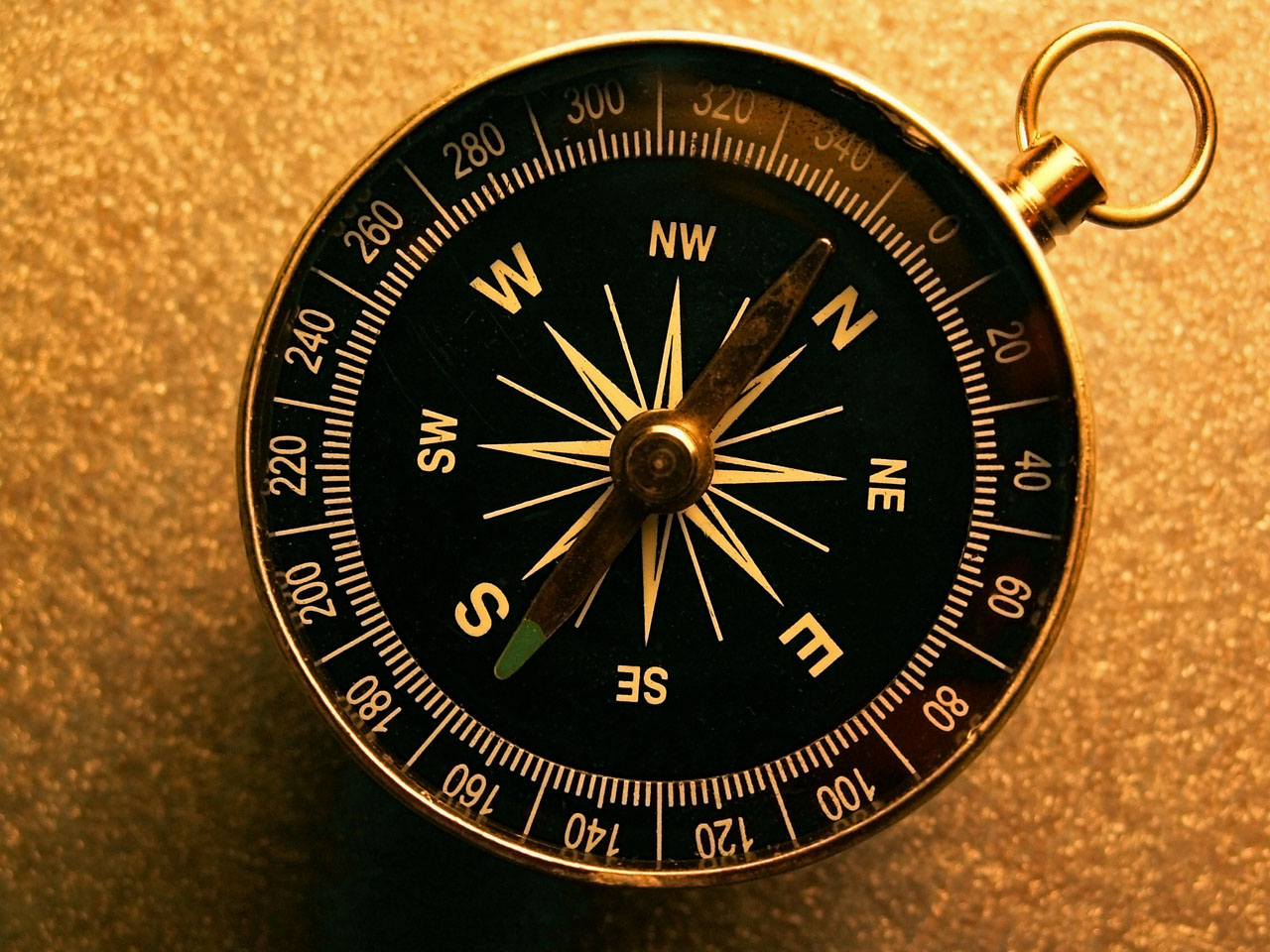
SCIENTIFIC VASTU FACTOR | CARDINAL DIRECTIONS | An Architect Explains
According to Vastu Shastra, the entire universe exists in endless space and has no direction whatsoever. However, on Earth our directions are defined with respect to the Sun and there are eight cardinal directions. They are:
- East (poorva): It is common knowledge that the Sun rises in the East.
- West (Paschima): The Sun sets in the West.
- North (Uttara): When one faces the East, the direction to the left is the North.
- South (Dakshina): When one faces the East, the direction to the right is called the South.
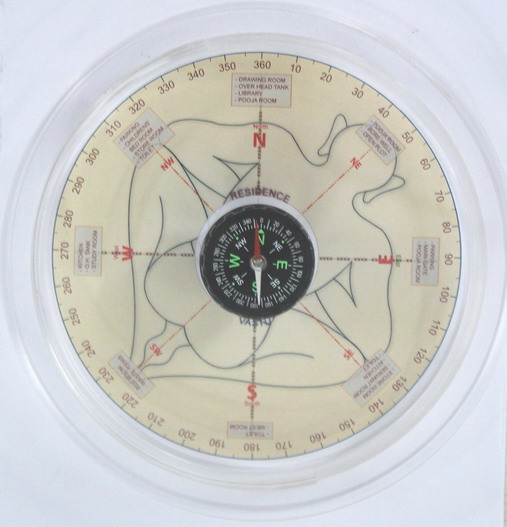
The corner where two Cardinal directions meet, is also significant since it combines the forces emanating from both the directions.
- North-East (Eeshanya): This is where the North and East meet.
- North-West (Vaayavya): This is where the North and the West meet.
- South-West (Nairuthya): This is where the South and the West meet.
- South-East (Aagneya): This is where the South and the East meet.
Vastu Shastra has a scientific basis. It is therefore, worthwhile to understand the importance of these Vastu factors, their positive and negative effects on Man and how the positive effects can be used to advantage in the design of his dwelling. All this has been explained under the following headings.
Why are the Cardinal directions important Vastu Shastra Factors?
What is the ideal layout of a house with respect to the Cardinal directions?
WHY ARE THE “EIGHT CARDINAL DIRECTIONS” AN IMPORTANT VASTU SHASTRA FACTOR?
The Sun sustains life and is very important to living things. Since the directions are defined with respect to the Sun, the ‘cardinal directions’ are also an important Vastu factor. In Vastu Shastra it is believed that the right dispositon of the rooms of the house with respect to the eight cardinal directions has a direct positive influence on the residents.
Since the Vastu pundits knew of the importance of sunlight to humans, along with the the Sun, the eight ‘cardinal directions’ were taken into account in the design of buildings. The main aim of Vastu Shastra is to ensure that the inmates of a house are inadvertently exposed to the useful rays of sunlight, even if they are inside the house the whole day. But during a day, people perform different activities in different rooms at different times and the Sun’s position keeps changing with respect to the ‘cardinal directions’. So to ensure that the inmates get exposed to sunlight constantly, each room should be positioned in a specific cardinal direction so that it faces the Sun at the time of the day when it is most likely to be used by them.
ACCORDING TO VASTU SHASTRA, WHAT IS THE IDEAL LAYOUT OF A HOUSE WITH RESPECT TO THE CARDINAL DIRECTIONS?
Vastu Shastra prescribes a plan called the Vastu Purusha Mandala, in which each room (depending on it’s function) is located in a specific cardinal direction and to make it easy to remember, Vastu assigns symbolic gods (who have certain inherent qualities) to each of the eight cardinal directions. For example, the Kitchen (where cooking is the main activity) is positioned in the South-East direction and Agni, the god of fire is assigned to this direction.
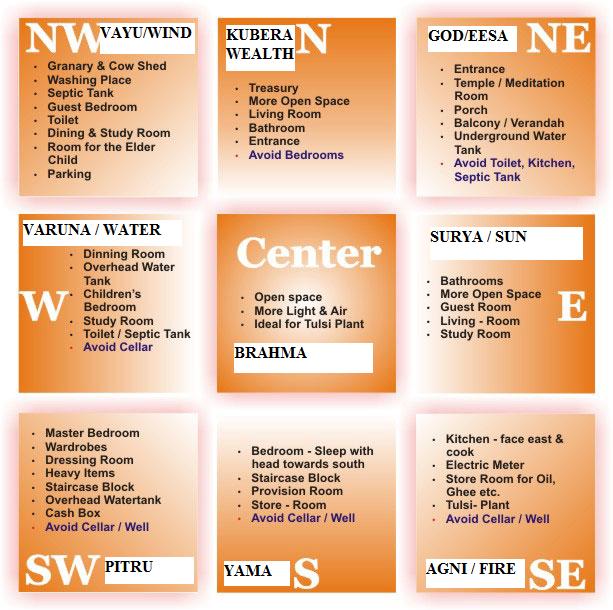
Here, I have explained the ‘eight cardinal directions’ with the preferred rooms and the symbolic gods that rule these directions. Since Vaastu is a science, every guideline is based on logic and reasoning. As an Architect, I have attempted to explain these guidelines rationally and scientifically, so that you can decide what you want to follow and what you don’t.
 NORTH-EAST (Eeshanya), the direction of the supreme being is suitable for open space,Water source and Puja Room/meditation room: The Logic – Just before dawn, between 3am and 6am, the Sun is in the North-Eastern part of the house and as these hours are ideal for yoga, meditation or prayer, this is t he right direction for the Puja/meditation room. Since the North-East corner gets constant sunlight (through the year) from the North and morning sunlight from the East, it is preferable to have lots of open space to allow unobstructed sunlight into the house. In addition, because of the available open space and the Sun’s germicidal UV rays, the Water source (in ancient times an open well) can be located here.
E AST (Purva) ruled by the Sun god, Surya is the ideal direction for Main doors and windows, Bathrooms: The Logic-The rising Sun is in the East between 6am and 7.30am and as this is the right time for bathing etc, this is the ideal position for Bathrooms. Since the rising Sun represents the essence of all beginnings, having the main door here is a sign of veneration to the Sun. Lots of openings in the East will ensure that the UV rays of the morning sunlight can engulf the interior of the house and destroy the bacteria that would have multiplied during the night.
 SOUTH-EAST (Aagneya) the direction of Agni, the god of fire is best for the Kitchen: The Logic- The Sun is in the South-East from 7.30am to 9am and as this is the best time for preparing and cooking food, the Kitchen can be located here. The germicidal UV rays of the Sun will keep the kitchen counter free from germs that spoil the food.
SOUTH (Dakshina), the direction of Yama is suitable for Office, Children’s bedrooms, Store rooms: The Logic – The Sun is in the South between 9am and noon and is the right time to do work. Therefore this is the best direction for an office and Children’s bedrooms. By noon, the intensity of the heat is high and so the South is also ideal for store rooms which need to be moisture proof.
SOUTH -WEST (Nairutya) the direction of Pitru, the ancestors is suitable for Master bedroom, safe, wardrobes, library : The Logic – The Sun is in the South-West section of the house between noon and 3pm and this period is called Vishranti (resting period). Hence, this is the best position for the Master bedroom. Since the owner sleeps here it also makes sense to have his safe here. However, the South-West tends to get heated up by the sunlight reflected from the West and so it is advisable to have a library or wardrobes on the West wall of the room to reduce the heat.
 WEST (Paschima) governed by the water God, Varuna is the best direction for Childrens’ bedrooms, study room, Bathrooms, Toilets, Trees: The Logic – The Sun is in the West between 3pm and 6pm and since this is the ideal time for children to study, the Childrens Bedrooms and study room can be located here. The West gets heated up more than the other directions beacuse of the hot afternoon Sun and the re-reflection of it’s infra red rays from the ground. Therefore, less used rooms like Toilets, Bathrooms and Store rooms can be placed here as they will serve as a buffer and prevent the rest of the house from getting heated up. Also, they will remain dry and hygienic due to the heat.
N ORTH-WEST (Vaayavya) the direction of the wind God, Vaayu is right for the Dining room, Childrens bedrooms, Toilets, garages: The Logic -The Sun (though not visible) is in the North-West after 6pm and this is the time to eat, relax and go to bed. So this is the best position for a dining room and bedroom. The North-West too gets heated up by the evening Sun. So, the less used rooms like Toilets, Store rooms, garage can be placed here as they will serve as buffers and prevent the rest of the house from getting heated up.
NORTH (Uttara) ruled by the god of wealth, Kubera is the ideal direction for Living room, open  spaces: The North is the direction of the Pole star, the fixed point in the sky that denotes stability and security. Hence, this is the direction to transact all business. The Logic – In India, (being in the northern hemisphere near the equator), there is constant light form the North, through the year. Hence it makes sense to have open spaces in the North, so that the light is not obstructed and can permeate into the House. Similarly, the Main entrance door can be here as it can be easily accessed from the open spaces. The Living room too, can be on this side as it is close to the main door and is convenient for business transactions, since the outsiders will be entertained here.
This post was about the Eight Cardinal directions and their effects on living beings, in Vastu Shastra. Read about another important Vastu Shastra Factor that affects us and our buildings, namely:

If you found this post useful, all it takes is a simple click on the “pin it” “like,” “share,” “tweet,” or Google+ buttons below the post.
Related Topics:
- Vastu Shastra | Explained By An Architect
- Vastu Shastra | Principles For A House
- Vastu Shastra | Factors That Impact A House
- Vastu Guidelines | Selecting The Right Site
- Vastu Guidelines | Designing A House
- Vastu Guidelines | Rituals For A House
- Vastu Guidelines | Construction Of A House
- Vastu Guidelines | Non-Residential Buildings
- Remedies For Vastu Defects
My plot of land is south west facing at 220°. There is a large body of water/pond spanning east to north directly behind the plot. I don’t understand why sw facing houses are so negative according to vastu. I can construct the house meeting several principles like master bedroom in west south west direction, kitchen in a south east, parking north north west, study in east north east (I like early morning studies so I match location with sun),I can even put larger yard space to north east /back of the house than to southwest/front of the house. But I still read it’s not a recommended plot direction. What are your thoughts. Also if the house is facing sw at 220°, that makes the corners of the house cardinal points south/east/north/west etc and so does that mean there is no “ne corner” or “se corner” anymore? Would the kitchen which would have been in the “se corner” now follow the compass directions for southeast and move to the middle of that side of the house? Also for dividing the front wall to get panas for front door estimation, is the 4 the pana still considered positive even if the house is sw facing and not directly south facing? And last question is it the plot width or the house width that you divide by 9 when calculating panas? Thank you!!!
hello sir/ madam,
Thank you for the explanation, so far the best site i have seen which explains the science behind vaastu in a more understandable way.
my concern, i live in Australia (southern hemisphere), and here the direction of sun is opposite to India, so does same vaastu rules apply here and if not how does it change.
could you please highlight the most vital points to keep in mind when designing the home in australia, i have a west facing block where i intend to build.
i would appreciate your views.
thank you
kanika
thank you sir for your information
Hi Vinay,
Thank you for taking the time to leave a note of appreciation.
Admin (lady architect, not sir!!)
I am planning to purchase a villa which is facing towards north, a immediate road runs straight towards north from the entrance gate, good enough space is kept open from the entrance gate to entrance door, the entrance door of the villa is in east and rest of the rooms are as per the basic vaasthu standards. Kindly suggest me whether I can go ahead to purchase this villa or not.
Hi Ram Kumar,
From your description, I am assuming that the spearing road is hitting at the north. But since the entrance door is in the East, it will not be badly affected by the spearing road. However, like I always say, you are the best judge. ‘Feel the space’ and then make the decision based on how positively you feel in buying this house.
Admin.
your effort on providing the information is really great and appreciable, it will be an eye opener for all the hi-tech robots who are living in superstitious aura. Thanks a lot again for your great explanations in a scientific manner.
Hi Ram Kumar,
Thank you for the appreciation.
Admin
I appreciate your time and efforts to explain each direction’s significance and its role in determining the location of the rooms and activities in them.
I live in the US and looking to buy/build a house. It is impossible to have all vastu factors satisfied in a house. Besides many things like location of water sources, windows, home-office, dining room and bathrooms are all made per specific requirements of the people here.
So I would like to know the factors in the order of importance. Which factors should absolutely not be violated?
Both my wife and I work, so the Entrance, Kitchen & Bedrooms are the ones that we use the most when we are home in the evening and at night.
Thank you and Regards
Hi Seshadri,
First of all thank you for your appreciation. Secondly, Vastu guidelines vary from region to region because it is based on orientation, wind directions, Sun position for the prevailing part of the year etc. So, since you are in the US you cannot apply the vastu guidelines which are more effective in India. However, you can apply some basic rules to your living space such as ensuring a lot of light, ventilation, cross-ventilation and comfortable movement in the rooms around the furniture.
Like you say, the most used/accessed areas of a house are the Entrance, the kitchen and the bedroom and so most people even in India only insist that these rooms be in the right positions. The entrance should preferably be in the direction where there is constant light. The Kitchen should be in the Eastern side, NE or SE. The bedroom can be in the South, SE or Sw as it will be warmed by the afternoon Sun.
Admin
Thanku guruji
Thank You Santhanakrishnan. Please share in your circle.
Admin